Eduardo Reyes
Product Designer
HR & PAYROLL COMPANY
(
2025
)
Designed a 0-to-1 HR support product from scratch, opened a new pricing tier before engineering started

Role
Senior Product Designer
Timeline
Feb- Mar 2025
Overview
In early 2025, while working at a Payroll & HR company, I led the end-to-end design of an on-demand HR support product that transformed existing customer behavior into a new revenue stream.
By identifying that customers were already using platform support for HR questions, I validated a pay-as-needed model through AI prototyping and real sales conversations.
The outcome
The work combined research, strategy, AI validation, and product execution to ship an MVP HR Support Platform that allows customers to submit structured HR and payroll questions as paid, on-demand requests, connected directly to their payroll data and handled by HR experts.
Problem
During onboarding, account executives consistently struggled to upsell Local HR. The pattern was always similar:
Customers saw the value
But hesitated because of cost
Others said: “We only need help sometimes.”
At the same time, something else was happening. Customers were asking HR questions inside platform support tickets — even though:
That channel wasn’t designed for HR advice
Support agents weren’t HR experts
Issues were getting mixed together
That tension sparked a deeper question:
If customers clearly need HR expertise. Why aren’t they buying the product built for it?
Understanding low conversion
To understand what was really happening I partnered closely with our sales team. Together we:
Interviewed customers managing payroll & HR
Spoke with account executives
Reviewed real support conversations
I wanted to understand not just what people said — but what they actually did.
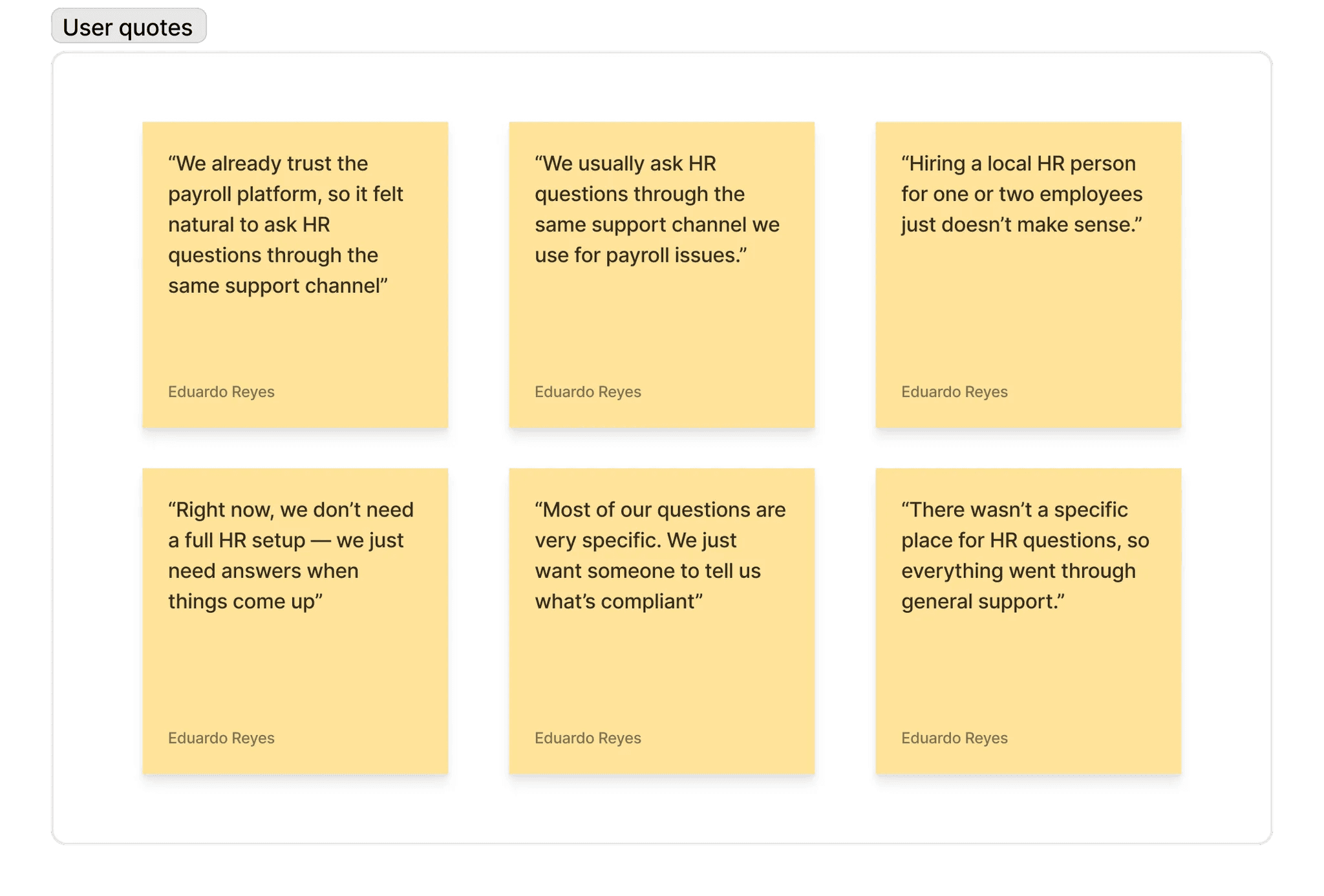
What I learned from research
HR help is situationalMost customers didn’t plan to hire a full HR team or services. They needed help in specific scenarios:
| Behavior told a different storyEven though Local HR felt “too expensive”, customers were already:
|
Closing the Gap: From Insight to Opportunity
Now that I had an understanding of the why, I defined two key opportunity statements:
How might we provide access to HR expertise without requiring customers to hire a full local HR service?
How might we productize HR support using the ticketing behavior customers already rely on?
To answer this questions I led a brainstorm workshop with: Product, Sales, Support and HR experts. The goal was: To explore all the possible ways we could deliver a cheap HR service.
This generated a set of possible solutions that were later added into an impact vs effort matrix to help decision making.
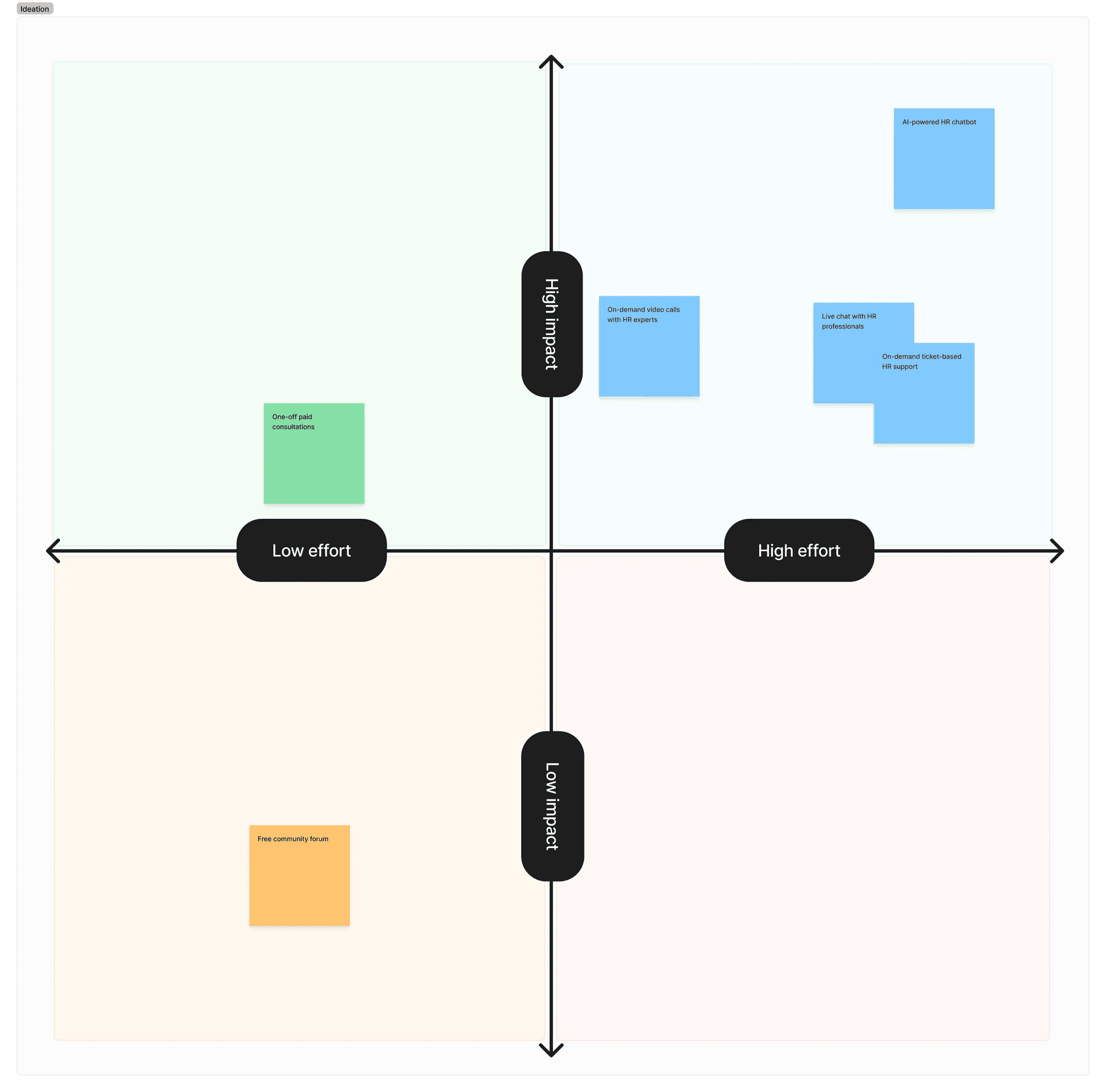
After evaluating the concepts, three ideas consistently stood out:
A dedicated ticketing system for HR questions
On-demand HR services (pay only when needed)
The ability to book live calls with HR experts for complex cases
This led us to the following hypothesis:
If we create a standalone, on-demand HR support service — inspired by the ticketing mental model but clearly separated from platform support and Local HR — customers will be willing to pay for expert help only when they need it, without committing to long-term contracts.
Supporting AI to validate the concept
With a strong hypothesis in place, one of the constraints I had was time. I leaned into AI to quickly validate the concept before investing in full design iterations.
I framed this through a Lean UX approach: What is the minimum we can do to quickly validate the concept?
An ai-generated prototype that simulated the experience that we can use as an artifact to ensure we are building something customers would actually pay for.
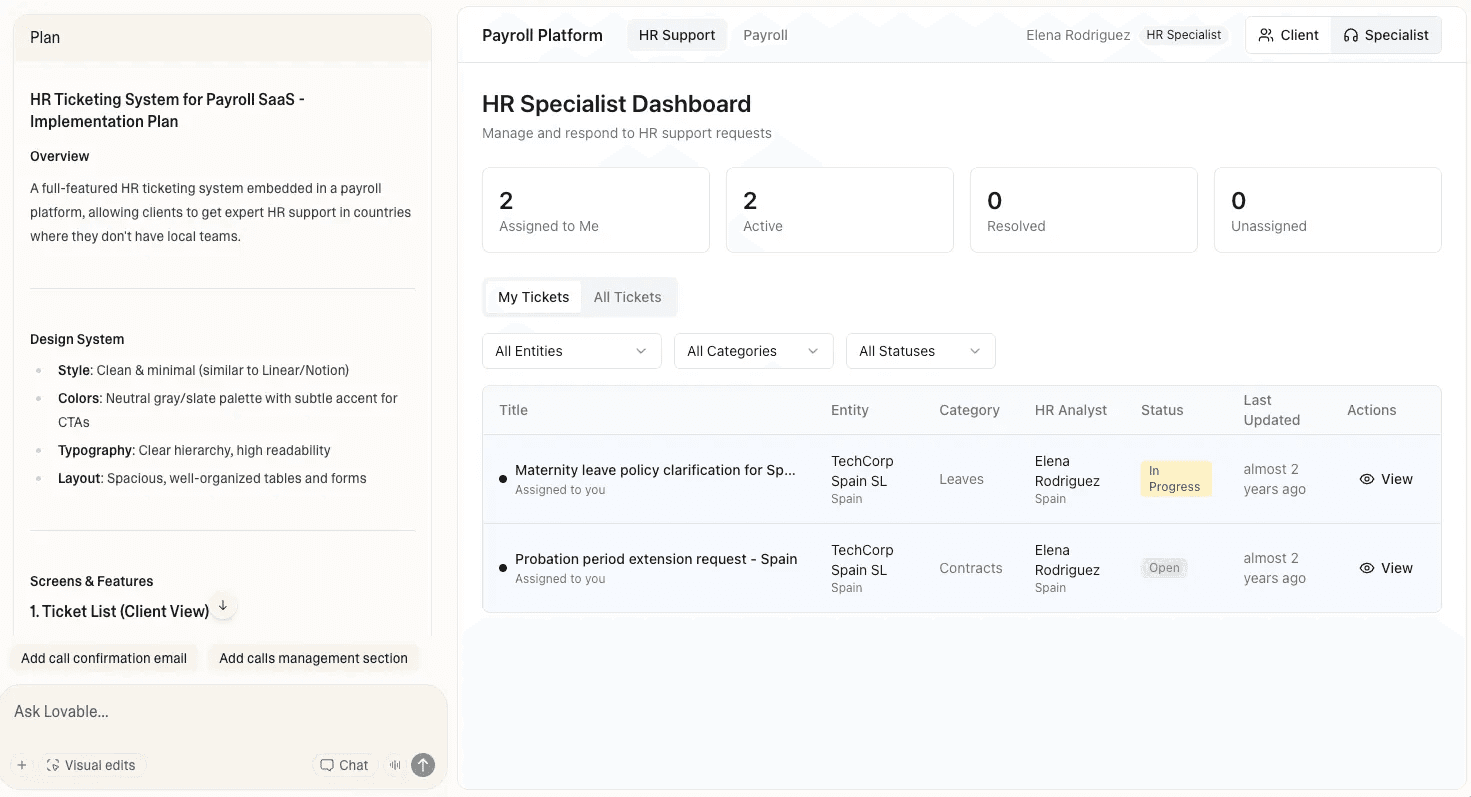
We scheduled interviews with clients form then to review the prototype. What we learned:
Customers preferred pay-as-needed over subscriptions
They actively avoided long-term commitments
Flexibility was the core value
From AI design to a live product
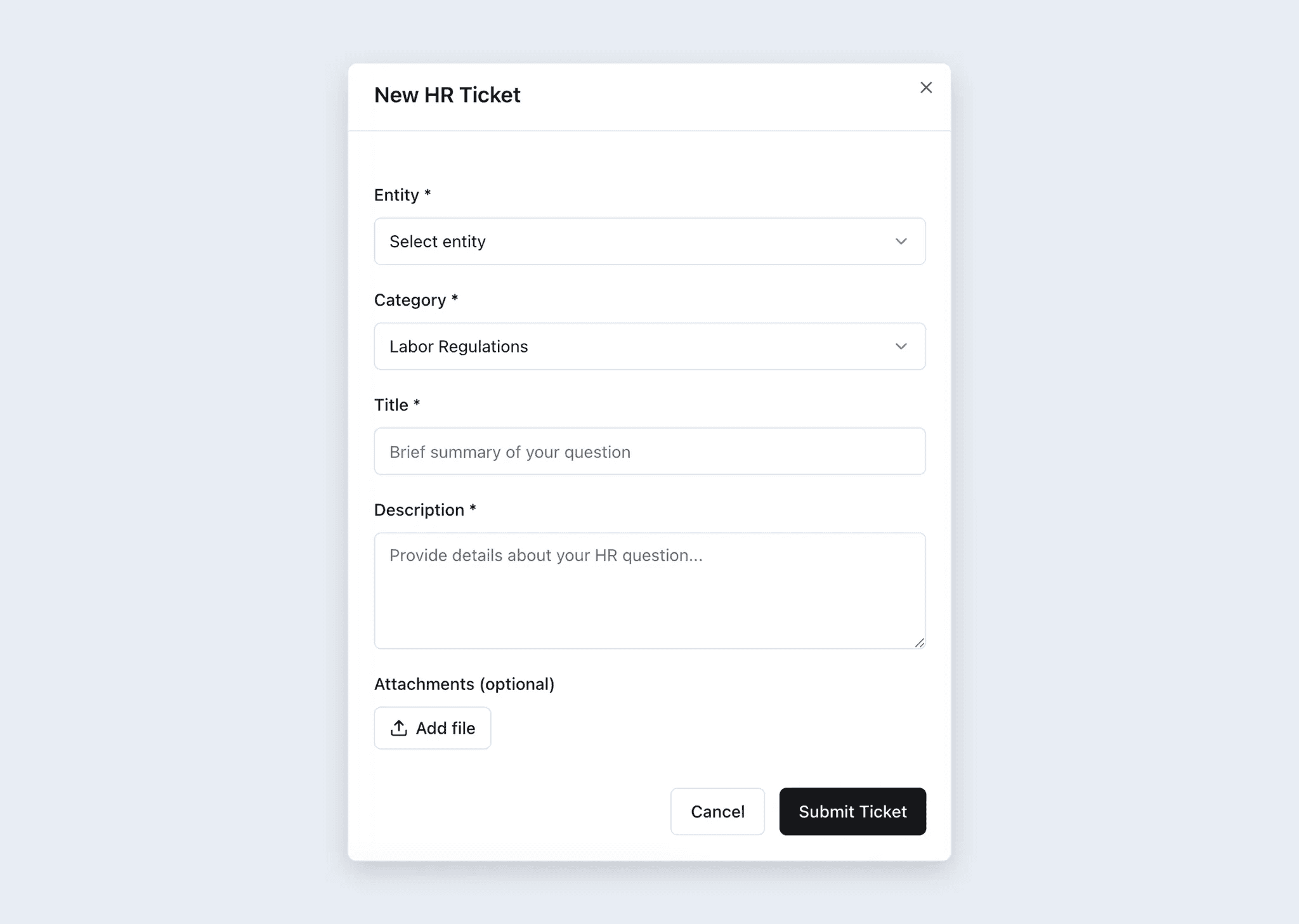
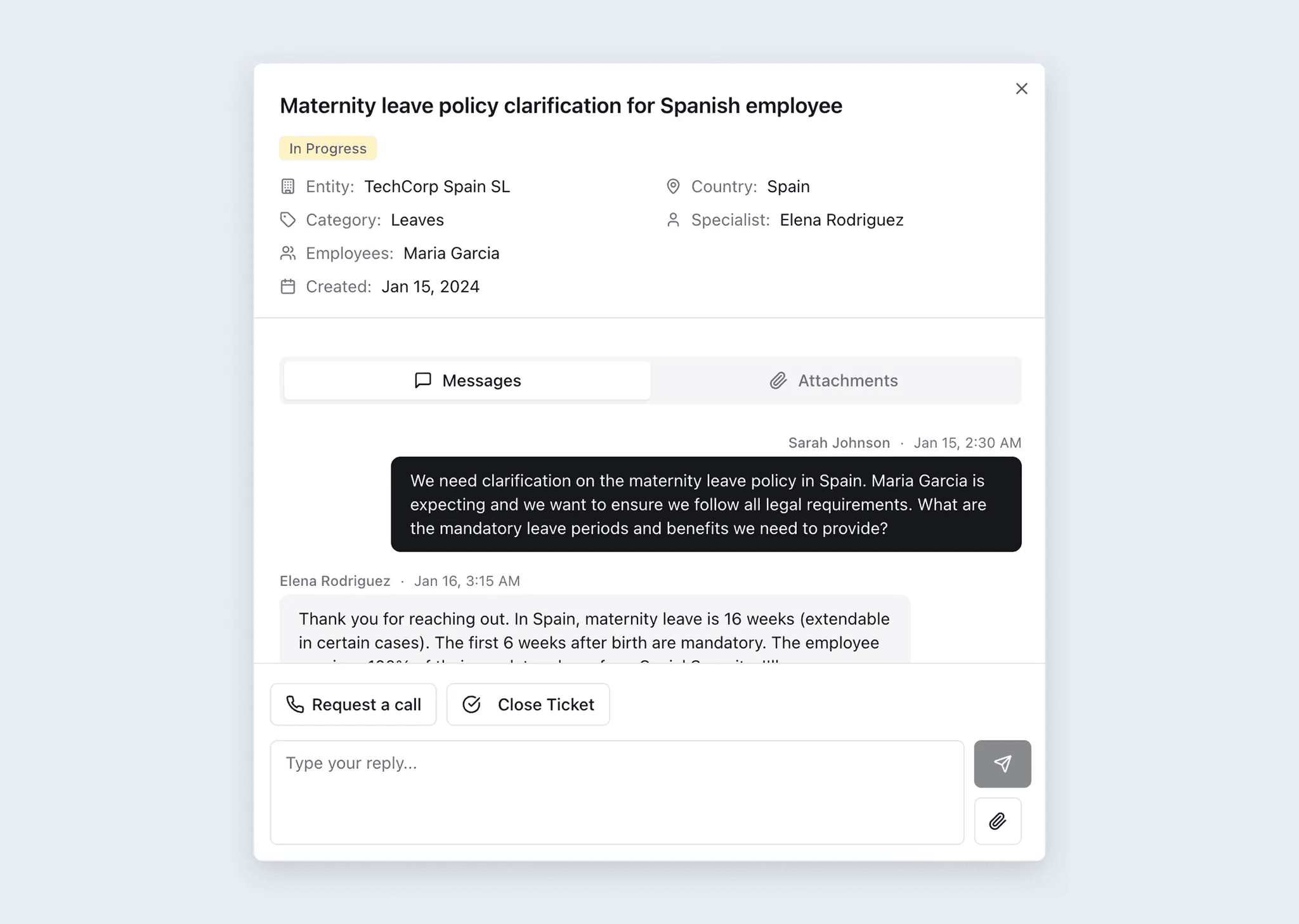
The insights from our AI validation phase directly shaped how we designed the product. We ship an HR Support Platform that allows customers to submit structured HR and payroll questions as paid, on-demand requests — connected directly to their payroll data and handled by HR experts.
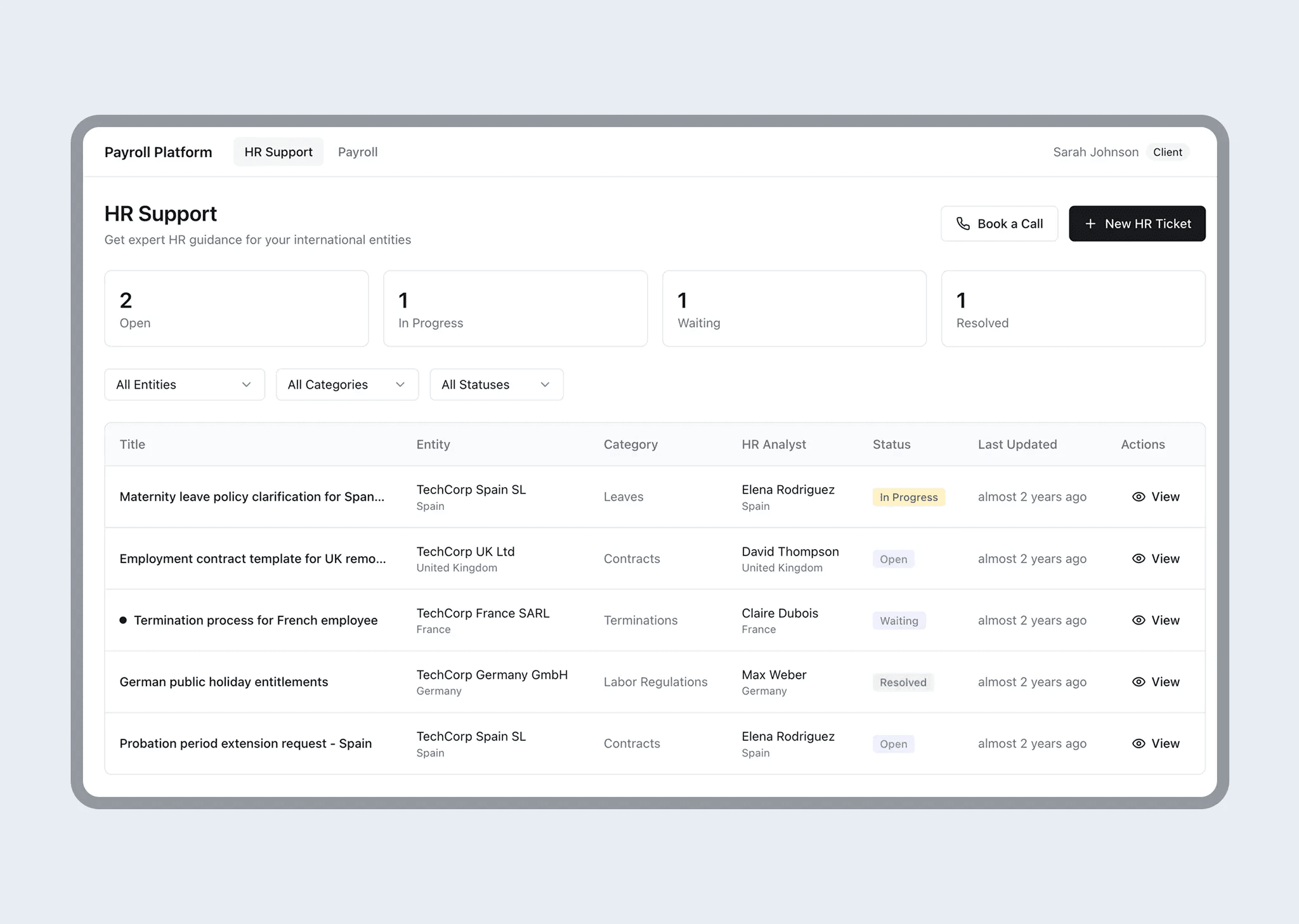
Structured HR request flows
Customers could submit HR questions through guided flows tied to payroll events, contracts, and regions — ensuring experts received the right context from the start.
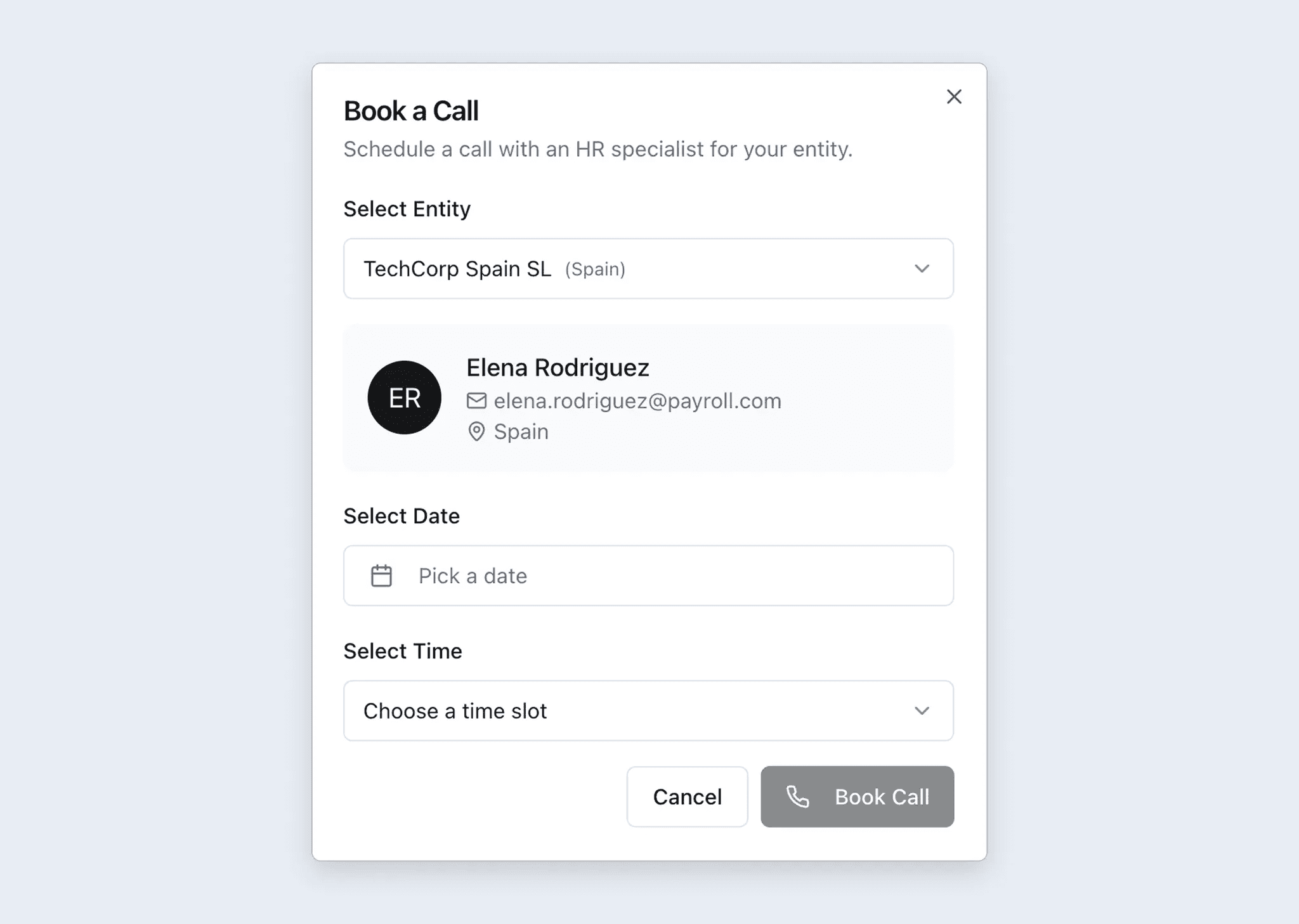
Ability to book an HR expert call
For complex or high-risk situations, customers could book a 1:1 call with an HR expert directly from the platform.
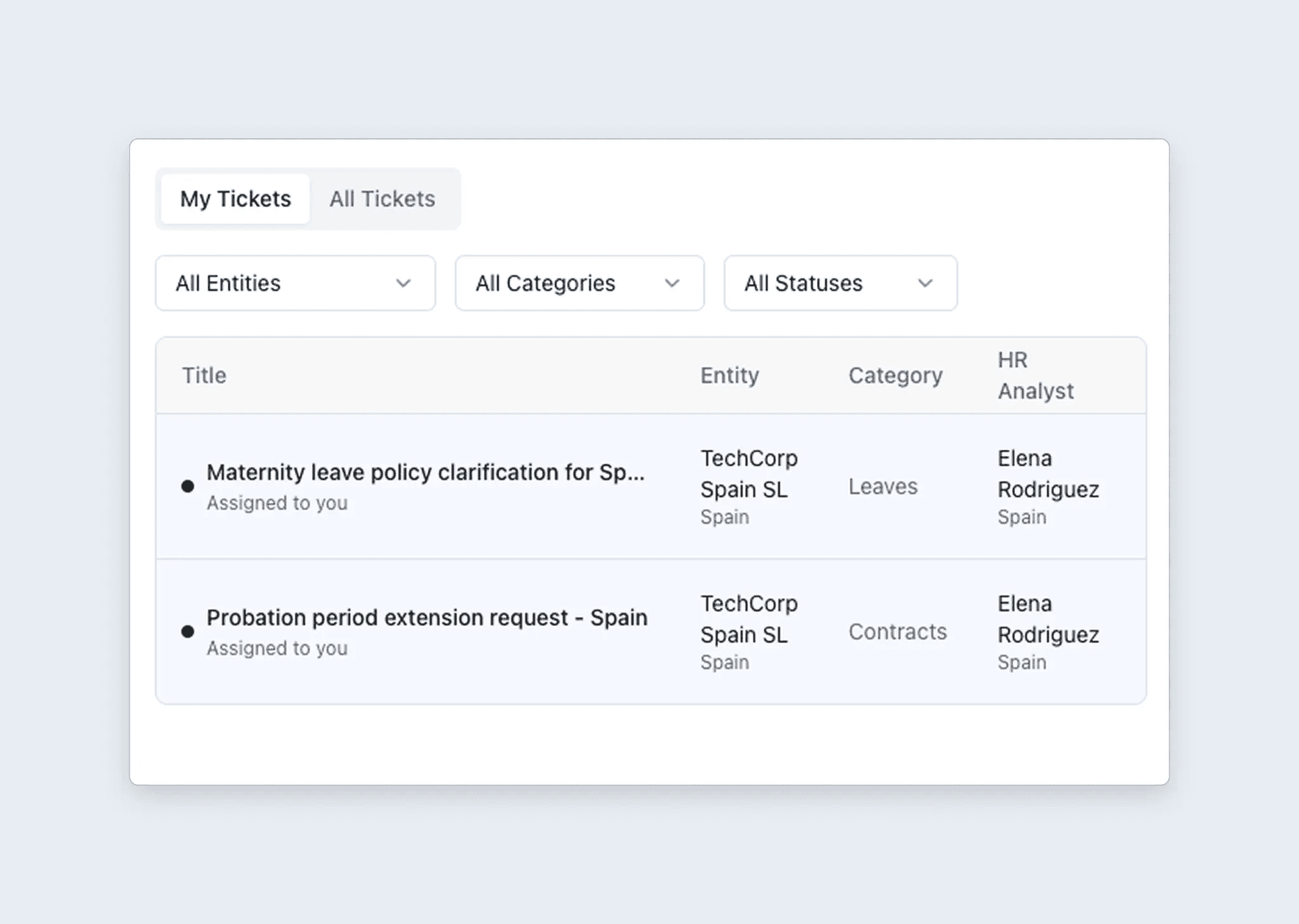
Expert-facing workflows
Internal HR experts received requests with relevant payroll data, history, and country context
Impact
After launch:
HR and payroll questions decreased in platform support channels
Customers resolved HR questions faster with clearer ownership
Support teams reduced time spent triaging non-platform issues
Customers showed willingness to pay for HR expertise on demand
The platform established a scalable alternative to full local HR services while reducing operational strain.
Learnings
Clients strongly preferred asynchronous ticket-based support over live calls, as it was more cost-effective and fit better into their workflows
Live calls were perceived as valuable but reserved for high-complexity or sensitive cases due to higher cost
© 2026 Eduardo Reyes